Let the whole room lead.
A sample tells you about a material. A room tells you whether it belongs. Before a selection is settled, gather everything the surface will live beside and look at them together.
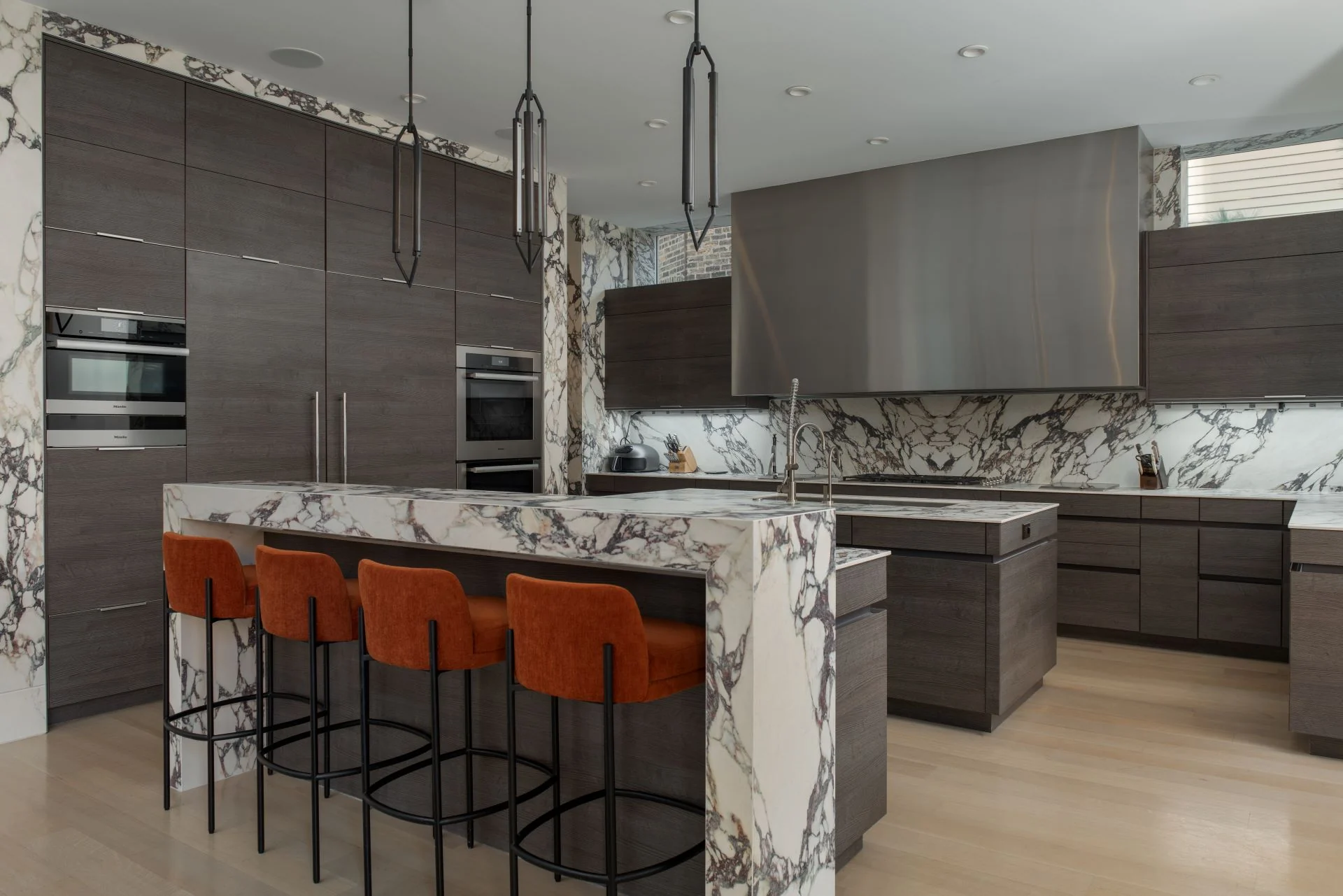
Start with the room
Start with the room, rather than an isolated sample. Look at the cabinetry, floor, wall color and the light that reaches the space. Collect a few photographs and place your material references alongside them. The aim is to understand how everything will feel together.
Light is the part most easily forgotten. A north-facing kitchen and a south-facing one will not treat the same slab alike, and neither will read the way it did under showroom lighting. Where you can, look at your references in the room itself, at the hour you will use it most.
Decide what draws the eye
Decide what should draw the eye. Expressive veining can give an island a strong presence, while a quieter surface can leave more room for timber, lighting or artwork. Neither approach needs to appear everywhere.
A consistent color direction can connect surfaces without making every element identical. A splashback and an island cut from the same family, in different characters, will often hold a room together better than the same slab used twice.
From a sample to a slab
Use samples to explore color and finish, then ask to see the full slab before confirming a selection. A small piece cannot show the complete pattern — where the veining gathers, where it thins, and how it will fall across the length of an island.
Bring your favorites, room photographs and plans to the project conversation so the material can be considered in context. That is also the moment to confirm the exact product, its finish and its suitability for each place you intend to use it.