Porcelain, in plain terms.
Large format porcelain is described in a lot of different ways. It helps to separate what the material is from what any particular product can do.
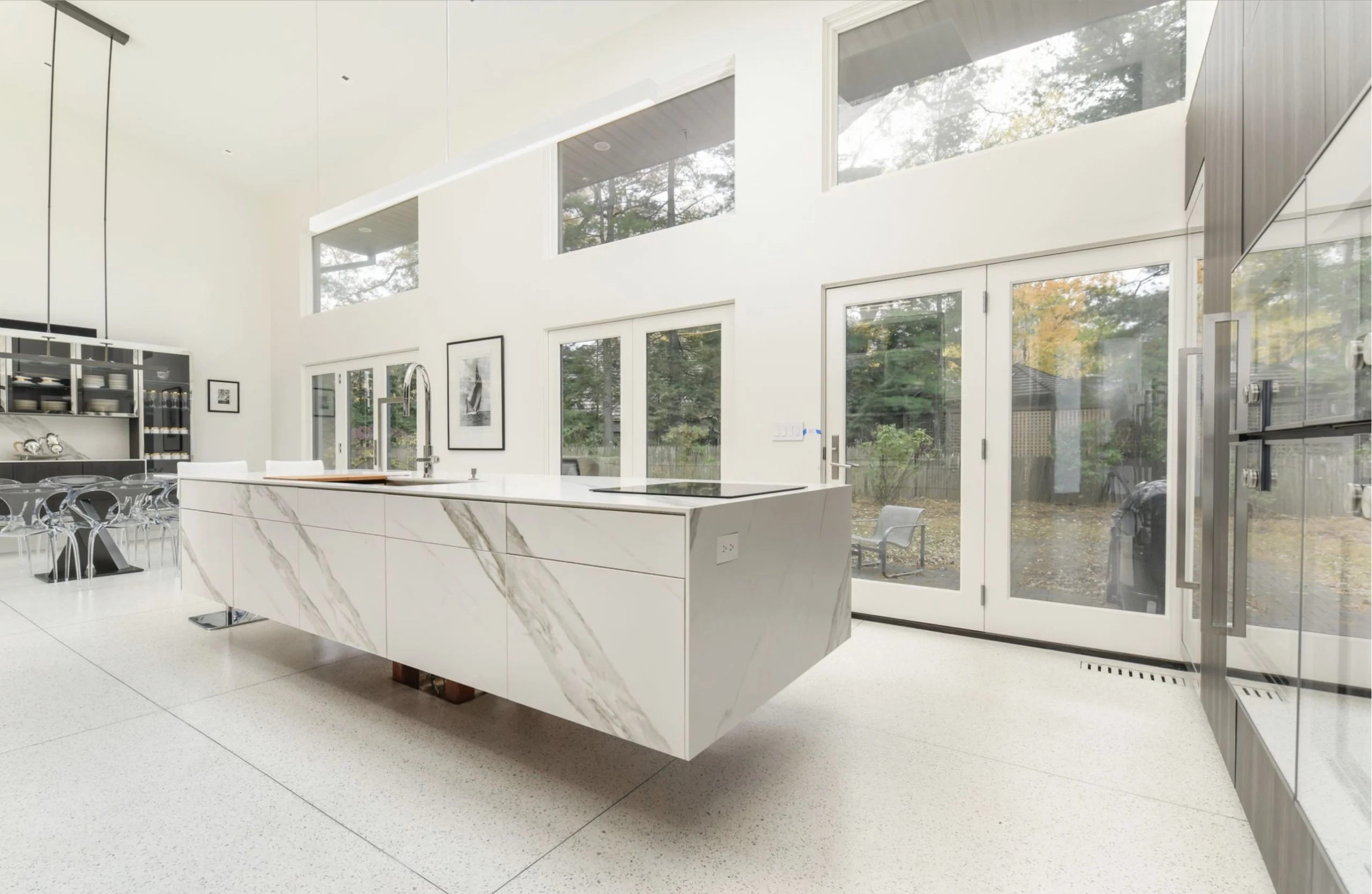
What the material is
Porcelain slabs are fired ceramic. Mineral raw materials are pressed and fired at high temperature into a dense, hard sheet, and the surface pattern is applied during manufacture rather than formed by geology. That is why two slabs of the same product resemble one another more closely than two pieces of natural stone.
It also means the properties belong to the product, not to the word. Manufacturers publish technical data for each range, and those figures are the ones that answer questions about water, heat, staining and wear.
Why the format matters
The appeal of a large slab is what it lets you leave out. Fewer joints across an island, a splashback that runs to the ceiling in one piece, a shower wall without a grid of grout lines.
Format is also a logistics question. Large pieces have to reach the room they are destined for, which is why access, stairs and turning space come up early in a project conversation.
Where it is specified
Porcelain appears on worktops and islands, on walls and splashbacks, on floors, around fireplaces and on furniture. It is used indoors and, in the appropriate products and thicknesses, outdoors.
Thickness usually follows the application, and so does finish. A floor, a shower wall and a kitchen island each have different requirements, and one attractive surface is not automatically right for all three.
What to confirm
For any selection, record the manufacturer, product name, finish, thickness and the application you intend. Ask the team to confirm availability and the installation requirements that go with it.
Keep the product documentation with your project records. It is the reference for care, for suitability and for anything that needs checking later.