The details that make it yours.
The character of a finished room is usually decided in the places two things meet. Those junctions are easiest to discuss while the drawings are still open.
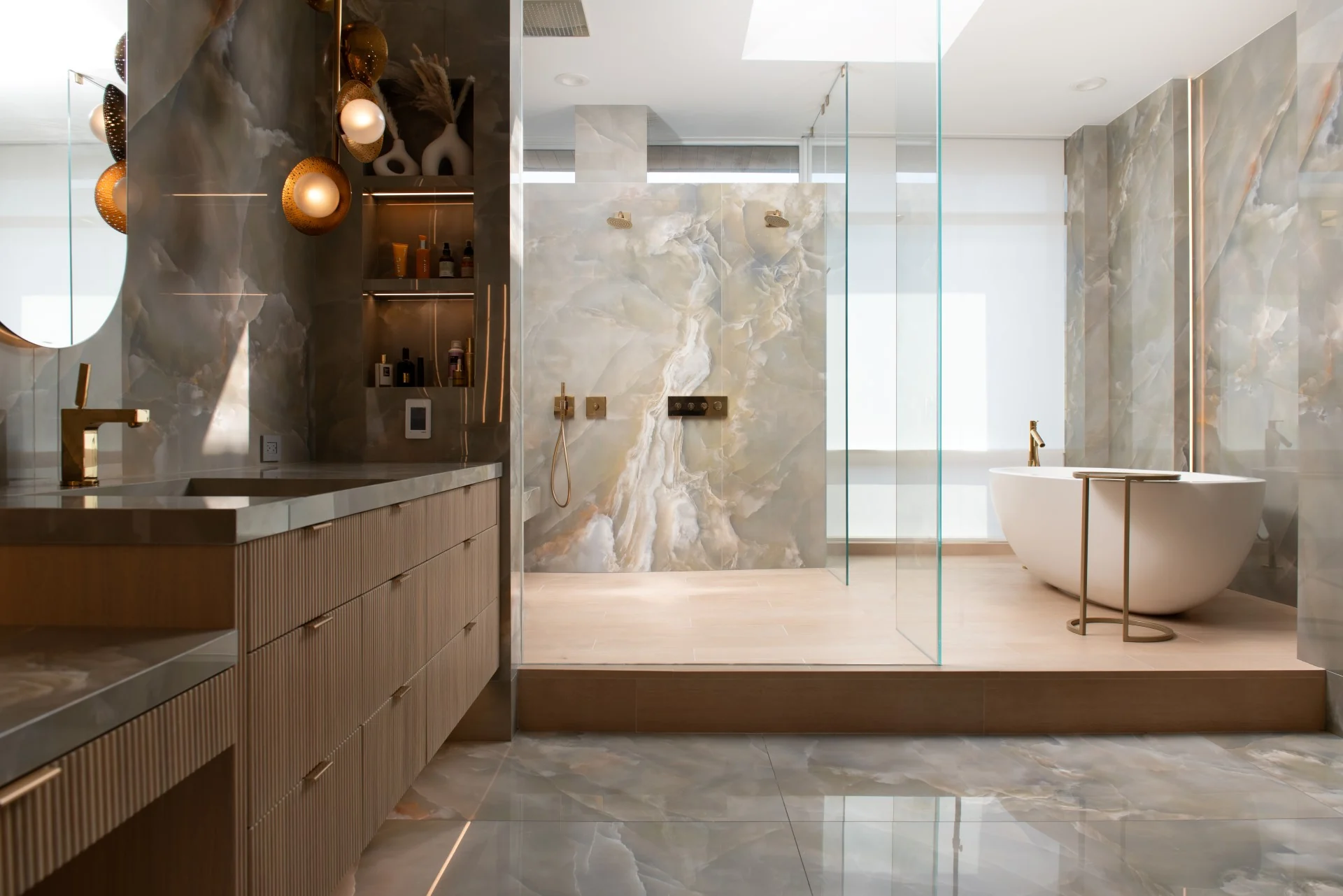
A surface is a set of decisions
A finished surface is a collection of decisions. Where it meets a cabinet, turns a corner or frames a fixture can influence the way the whole room reads. These details are easiest to discuss while the design is still taking shape.
They are also the decisions most often deferred. An edge profile or a return is simple to agree in a drawing and expensive to reconsider once material has been cut.
Bring the drawings
Gather drawings and identify the features that matter to you. An island edge, a shelf, a vanity or the return of a fireplace surround may each need a different conversation.
Photographs of details you like are useful, especially when you can explain what appeals to you about them — the thickness of an edge, the way a surface folds down a side, the absence of a visible joint. Naming what you are looking at makes it far easier to reproduce.
Pattern direction and joints
Discuss pattern direction and proposed joints with your project team. A vein that looks striking on a full slab may read differently once the material is divided into smaller pieces.
Review the intended layout alongside appliance and fixture positions, then confirm dimensions and fabrication details before work begins. A cut-out in the wrong part of a pattern is a decision, whether or not anyone made it deliberately.